This content was aggregated from local dealer data and insights provided by the USA Today Network Automotive Insights team using Google Gemini and the Vehicles for Sale Near Lansing marketplace writing team.
For BMW X5 owners in Okemos, the possibility of a next-generation BMW iX5 raises an important question: Is it better to upgrade now or wait for a potentially transformative new SUV? BMW's continued investment in electrification, advanced driver technology, and alternative powertrains makes the future X5 family especially interesting for luxury SUV shoppers. However, with the availability, pricing, and final specifications of a 2027 BMW iX5 still unverified, waiting involves more uncertainty than choosing an established X5 configuration. Understanding what BMW has confirmed, what remains speculative, and how different powertrains fit Michigan driving conditions can help Okemos buyers make a more informed decision.
The BMW X5 has long occupied an important position in the luxury SUV market, combining refined road manners, strong performance, premium technology, and practical passenger space.
For drivers in Okemos and the greater Lansing area, the X5 offers the versatility needed for everyday commuting, family transportation, highway travel, and Michigan's changing seasons.
The potential arrival of a BMW iX5 introduces another consideration: whether the next generation of electrified luxury SUVs could deliver meaningful advantages over today's gasoline and plug-in hybrid models.
The name BMW iX5 has been associated with BMW's development of hydrogen fuel-cell technology, particularly through its iX5 Hydrogen pilot program.
BMW has also announced plans to expand its next-generation vehicle technology and develop additional electrified models.
However, a series-production BMW iX5 Hydrogen with confirmed U.S. availability, retail pricing, final specifications, and an established trim lineup has not been independently verified for this article.
That distinction matters because a hydrogen fuel-cell vehicle (FCEV) and a battery-electric vehicle (BEV) use fundamentally different technologies.
A battery-electric vehicle stores electricity in a rechargeable battery and typically uses external charging equipment.
A hydrogen fuel-cell vehicle stores hydrogen onboard and converts it into electricity through a fuel-cell system. It requires access to compatible hydrogen refueling stations rather than conventional EV charging infrastructure.
BMW has publicly discussed plans for a series-production hydrogen fuel-cell vehicle around 2028, but that does not establish a confirmed retail launch or specific model year availability.
For Okemos buyers, the most sensible approach is to evaluate the established X5 lineup against the potential benefits of future electrified models without treating an unconfirmed vehicle as an available purchasing option.
There are several reasons an existing BMW X5 owner might be interested in waiting for a future generation.
BMW's development of new electric architectures, digital interfaces, driver-assistance systems, and efficiency technologies could produce meaningful improvements in upcoming vehicles.
Future models may also offer updated exterior styling, more advanced connectivity, and changes to the overall driving experience.
For owners whose current X5 remains reliable and meets their needs, waiting can preserve flexibility while BMW provides more definitive information.
However, delaying a purchase also has potential costs.
An aging vehicle may require additional maintenance, its trade-in value may change, and the owner may miss opportunities to upgrade to technology already available in established X5 models.
The right decision depends on the condition of the current vehicle, the buyer's powertrain preferences, and how much uncertainty they are comfortable accepting.
Before evaluating a future iX5, it helps to understand what current X5 models already provide.
The recent U.S. BMW X5 lineup offers several distinct approaches to performance and efficiency.
The X5 sDrive40i uses a turbocharged 3.0-liter inline-six engine with 48-volt mild-hybrid technology, producing approximately 375 horsepower.
The X5 xDrive40i offers similar performance with BMW's xDrive all-wheel-drive system.
For Michigan drivers, xDrive can be particularly appealing because it helps distribute engine power between the front and rear axles when traction conditions change.
The X5 xDrive50e plug-in hybrid combines a gasoline engine with an electric motor, producing approximately 483 combined horsepower in the recent model configuration.
This plug-in hybrid provides an alternative for drivers who want some electric-only driving capability without relying entirely on charging infrastructure for longer trips.
Final specifications depend on the model year and configuration, so buyers should confirm the details of the specific X5 they are considering.
BMW's ongoing development work suggests that future electrified SUVs may emphasize several areas:
Improved electric powertrain efficiency
More advanced digital displays and vehicle software
Updated driver-assistance technology
Refined electric-motor performance
New energy-management systems
Additional connectivity and personalization features
These are areas of technological development, not confirmed specifications for a 2027 BMW iX5.
BMW's Neue Klasse technology strategy has introduced innovations in electric drive systems, vehicle electronics, and digital user interfaces. However, the exact technologies that might appear in a future X5-related electric model must be confirmed through official product announcements.
For shoppers evaluating whether to wait, the most important missing information includes powertrain type, driving range, charging or refueling requirements, production timing, and U.S. availability.
Until those details are established, it is not possible to make a reliable specification-by-specification comparison with an existing X5.
One of the most important decisions for Okemos buyers is whether they want to transition fully away from gasoline.
A battery-electric SUV can offer smooth, quiet acceleration and potentially lower routine energy costs, particularly when charged at home.
However, its convenience depends on charging access, driving range, and charging performance in different temperatures.
A plug-in hybrid such as the X5 xDrive50e offers a different balance.
It can complete certain shorter trips using electric power when adequately charged, while the gasoline engine remains available for longer journeys.
For drivers who regularly travel between Okemos, Lansing, East Lansing, Detroit, Grand Rapids, and other Michigan destinations, this flexibility may be valuable.
A hydrogen fuel-cell vehicle would introduce another ownership model entirely. Refueling can be relatively quick where compatible infrastructure exists, but access to hydrogen stations is a major practical consideration.
Michigan shoppers should not assume that a future hydrogen-powered BMW could be refueled as conveniently as a gasoline X5 or charged like a battery-electric vehicle.
Modern BMW X5 models already offer a sophisticated cabin experience.
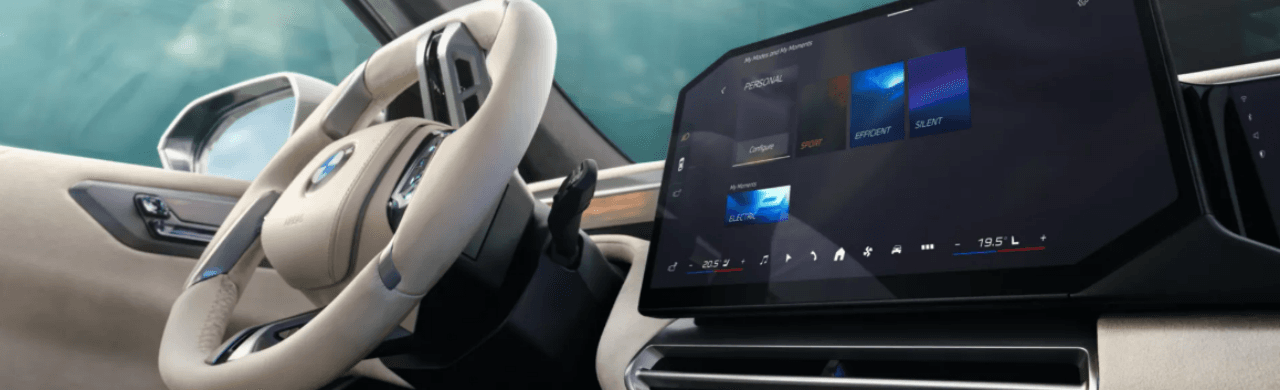
The recent X5 interior features BMW's Curved Display arrangement, combining a 12.3-inch digital instrument display with a 14.9-inch central infotainment display.
BMW's iDrive system integrates vehicle settings, navigation, entertainment, and connected services.
Depending on configuration, buyers can also find features such as:
Heated and ventilated seating
Premium upholstery and interior trim
Multi-zone climate control
Panoramic glass roof
Premium audio systems
Smartphone integration
Advanced parking assistance
Available hands-free driving assistance under specified conditions
These amenities help explain why a current X5 can remain a compelling purchase even as newer technologies approach.
A future iX5 might introduce a different digital interface, but its exact interior equipment and feature availability cannot yet be established.
The BMW X5 offers a range of active-safety and driver-assistance technologies designed to support everyday driving.
Depending on equipment, features may include forward collision warnings, automatic emergency braking, blind-spot monitoring, lane-related assistance, adaptive cruise control, and parking assistance.
These systems can be particularly useful during congested travel around Lansing and East Lansing.
However, snow, ice, road spray, and poor visibility may affect sensor performance.
Drivers should continue to maintain appropriate speeds and following distances regardless of the vehicle's assistance technology.
Any safety improvements associated with a future iX5 should be evaluated only after BMW publishes official specifications and relevant safety information.
The decision to wait for a future BMW iX5 becomes clearer when compared with the established X5 configurations.
Rather than focusing on an unverified future price, buyers should examine the capabilities available today and identify which potential future improvements would justify delaying a purchase.
Vehicle | Powertrain | Key Value Proposition | Best Fit |
BMW X5 sDrive40i | Turbocharged inline-six with mild-hybrid technology; rear-wheel drive | Luxury, performance, and conventional gasoline convenience | Drivers prioritizing established technology and everyday value |
BMW X5 xDrive40i | Turbocharged inline-six with mild-hybrid technology; AWD | Strong performance with additional traction capability | Michigan drivers wanting year-round versatility |
BMW X5 xDrive50e | Plug-in hybrid with AWD | Electric driving capability combined with gasoline flexibility | Drivers with home charging access who also take longer trips |
Upcoming BMW iX5 Hydrogen | Production powertrain and U.S. availability unverified | Possible future electrification and technology improvements | Buyers comfortable waiting for official announcements |
Important: The potential 2027 iX5 is included for research purposes only. Its presence in this comparison does not imply that a production vehicle has been announced for sale in Okemos.
The sDrive40i offers the core X5 experience with a powerful inline-six engine and premium interior.
Its appeal comes from providing BMW's driving refinement and practical SUV accommodations without requiring buyers to select the more complex plug-in hybrid powertrain.
For drivers who primarily travel on maintained roads and do not require AWD, it can represent a sensible entry point into the X5 family.
However, Michigan's winter conditions may lead some shoppers to prefer an xDrive-equipped configuration.
The xDrive40i adds all-wheel-drive capability while retaining the established gasoline powertrain.
This configuration may be especially attractive for Okemos residents who regularly encounter snow, slush, and changing road conditions.
BMW's xDrive system can help improve acceleration traction when grip is limited, although it does not eliminate the need for suitable winter tires.
For buyers who want a premium SUV with familiar refueling convenience and year-round capability, the xDrive40i presents a compelling balance.
The xDrive50e is particularly relevant for shoppers interested in electrification but uncertain about waiting for a future electric SUV.
Its plug-in hybrid system allows drivers to use external charging while retaining a gasoline engine for longer journeys.
The recent X5 xDrive50e offers an EPA-estimated electric driving range of approximately 38 miles, although actual results depend on temperature, driving conditions, and equipment.
For an Okemos resident whose daily commute falls within the available electric range, charging at home could reduce gasoline use during routine trips.
The gasoline engine remains available when additional range is needed.
This combination makes the xDrive50e a practical alternative for buyers who want to experience electric driving without committing to a fully electric ownership model.
A verified U.S. manufacturer's suggested retail price for a production BMW iX5 Hydrogen has not been established for this article.
Consequently, assigning an estimated price would risk misleading shoppers.
Future pricing could depend on the final powertrain, battery or fuel-cell technology, equipment, production location, and market positioning.
Buyers should also consider that new technology can affect insurance, maintenance, depreciation, and energy costs in ways that are difficult to predict before a vehicle reaches the market.
For current X5 owners, the strongest financial comparison is between the cost of keeping the existing vehicle and the cost of upgrading to an established model.
Waiting for an unconfirmed vehicle should be treated as a personal preference rather than a guaranteed financial advantage.
Okemos drivers experience a mixture of suburban streets, commercial areas, and regional highways.
Common travel patterns include commuting toward East Lansing, Michigan State University, downtown Lansing, and employment centers throughout Ingham County.
Major routes such as I-96, I-496, and US-127 connect the region with surrounding communities.
For these driving conditions, the BMW X5 offers a comfortable combination of highway performance, cabin refinement, and cargo versatility.
The xDrive40i is particularly appealing for drivers who want AWD capability without depending on external charging.
The xDrive50e may offer additional value for commuters who can charge at home and complete many routine trips using electric power.
A future fully electric BMW SUV could also be well suited to these driving patterns, provided its range and charging capabilities meet the owner's needs.
Cold weather is one of the most important factors when evaluating electrified vehicles in Okemos.
Low temperatures can reduce battery efficiency and increase energy consumption because the vehicle must manage battery temperature and cabin heating.
For a plug-in hybrid, this may reduce the distance available in electric mode.
For a battery-electric SUV, winter conditions can reduce driving range and influence charging performance.
The actual effect depends on battery technology, temperature, trip length, heating demand, and vehicle preparation.
Drivers with home charging may find it convenient to precondition their vehicles before departure, where supported.
Hydrogen fuel-cell vehicles face a different challenge: the availability of compatible refueling infrastructure.
Because consumer hydrogen refueling access is extremely limited in Michigan, a future hydrogen-powered iX5 would require careful infrastructure evaluation before it could be considered a practical daily driver.
Many Okemos residents use their SUVs for more than commuting.
Trips to Grand Rapids, Detroit, Ann Arbor, northern Michigan, and recreational destinations place additional importance on range, cargo space, and travel convenience.
The conventional X5 provides familiar gasoline refueling flexibility.
The xDrive50e combines gasoline range with the opportunity to use electricity for shorter trips.
A future battery-electric SUV could offer quiet highway travel and reduced gasoline dependence, but buyers would need to consider charging locations and travel time.
A hydrogen-powered model would require compatible stations along the intended route.
Until BMW confirms the powertrain and specifications of a production iX5, these practical considerations are more useful than speculative range or charging claims.
For buyers considering the X5 xDrive50e or a future battery-electric BMW, home charging access can strongly influence ownership convenience.
A dedicated Level 2 charging installation can make overnight charging practical, depending on the vehicle's onboard charging capability and household electrical system.
Homeowners should evaluate installation costs, electrical capacity, and utility rates.
Apartment and condominium residents may need to investigate shared charging options or nearby public infrastructure.
For drivers without convenient charging access, a conventional gasoline X5 may remain the simpler ownership choice.
Owners whose existing X5 remains comfortable, reliable, and affordable to maintain may have little reason to rush into another vehicle.
Waiting allows time for BMW to clarify its next-generation product plans and for more information about future electrified SUVs to become available.
However, drivers facing substantial maintenance expenses or changing transportation needs may benefit more from evaluating established X5 models now.
The decision should reflect the condition of the current vehicle, expected repair costs, financing considerations, and how urgently the owner needs an upgrade.
A future product announcement does not automatically make an existing vehicle obsolete.
A production BMW iX5 Hydrogen with confirmed U.S. retail availability has not been independently verified for this article. BMW has developed the iX5 Hydrogen as a pilot vehicle and has discussed future hydrogen fuel-cell production plans. Okemos shoppers should wait for official model announcements before assuming a specific iX5 configuration or launch date.
Waiting may make sense if your current X5 remains reliable and you are interested in future hydrogen fuel-cell technology. However, the proposed iX5 Hydrogen lacks verified U.S. specifications and immediate availability. Buyers who need a replacement sooner should compare established X5 models rather than postponing a necessary purchase indefinitely.
The X5 xDrive50e can be an attractive alternative because it combines plug-in electric driving with a gasoline engine for longer trips. For Okemos commuters with convenient home charging, the recent model's approximately 38-mile EPA-estimated electric range may cover many routine journeys. Actual range varies, especially during cold Michigan weather.
That depends on its final powertrain and specifications. Battery-electric vehicles can operate in cold climates but may experience reduced range and slower charging. Hydrogen fuel-cell vehicles require compatible refueling stations, which are currently extremely limited in Michigan. Winter tires, charging or refueling access, and the vehicle's confirmed capabilities would all influence practicality.
The X5 xDrive40i is a strong all-around choice for drivers who want premium comfort, powerful gasoline performance, and AWD capability for Michigan conditions. The xDrive50e may offer greater value for buyers with home charging access and suitable commuting patterns. The best choice depends on annual mileage, budget, winter-driving needs, and ownership priorities.
For current BMW X5 owners in Okemos, waiting for a potential iX5 Hydrogen is a decision that should be guided by verified information rather than expectations alone.
BMW's investment in electrification, digital technology, and alternative powertrains makes its future luxury SUVs worth watching.
However, the exact specifications, pricing, powertrain details, and U.S. availability of a production BMW iX5 Hydrogen remain unverified.
That uncertainty creates a meaningful distinction between waiting for future technology and choosing an established vehicle.
Drivers who are satisfied with their current X5 and do not need an immediate replacement may reasonably wait for more information.
Buyers who need a luxury SUV sooner already have several compelling choices.
The X5 xDrive40i provides a strong combination of performance, comfort, and Michigan-friendly AWD capability.
The X5 xDrive50e offers an appealing middle ground for shoppers interested in electric driving without abandoning gasoline flexibility.
For most Okemos buyers, the best decision is not necessarily to wait for the newest technology. It is to choose the vehicle that provides the right combination of capability, convenience, and long-term value for their actual driving needs.
Interested in learning more about BMW's next generation of electrified SUVs?
The best approach is to monitor official product announcements while comparing the established X5 models that already meet your transportation needs.
For now, explore available BMW X5 models near Okemos and follow BMW's official announcements for updates on the upcoming iX5 Hydrogen.
In the meantime, learn more about BMW of Okemos and explore dealership information while researching current BMW X5 configurations.
Written for https://vehiclesforsalenearlansing.com
By the USA TODAY Network Automotive Insights Team, in collaboration with BMW of Okemos and the Vehicles For Sale Near Lansing State Journal.
Disclaimer: This article's content is intended for informational purposes only. Vehicle specifications and features are based on data provided by J.D. Power and local dealerships and may vary by individual vehicle, VIN, trim, configuration, packages, and optional equipment. Vehicle images may not depict the exact model, trim, features, packages, accessories, or specifications described. Vehicle pricing, availability, features, and specifications are subject to change without notice. Please reference the dealership's vehicle listing and window sticker or consult the dealership directly for complete and accurate details.